Looking to hire a professional organizer? Buyer beware

Posted by


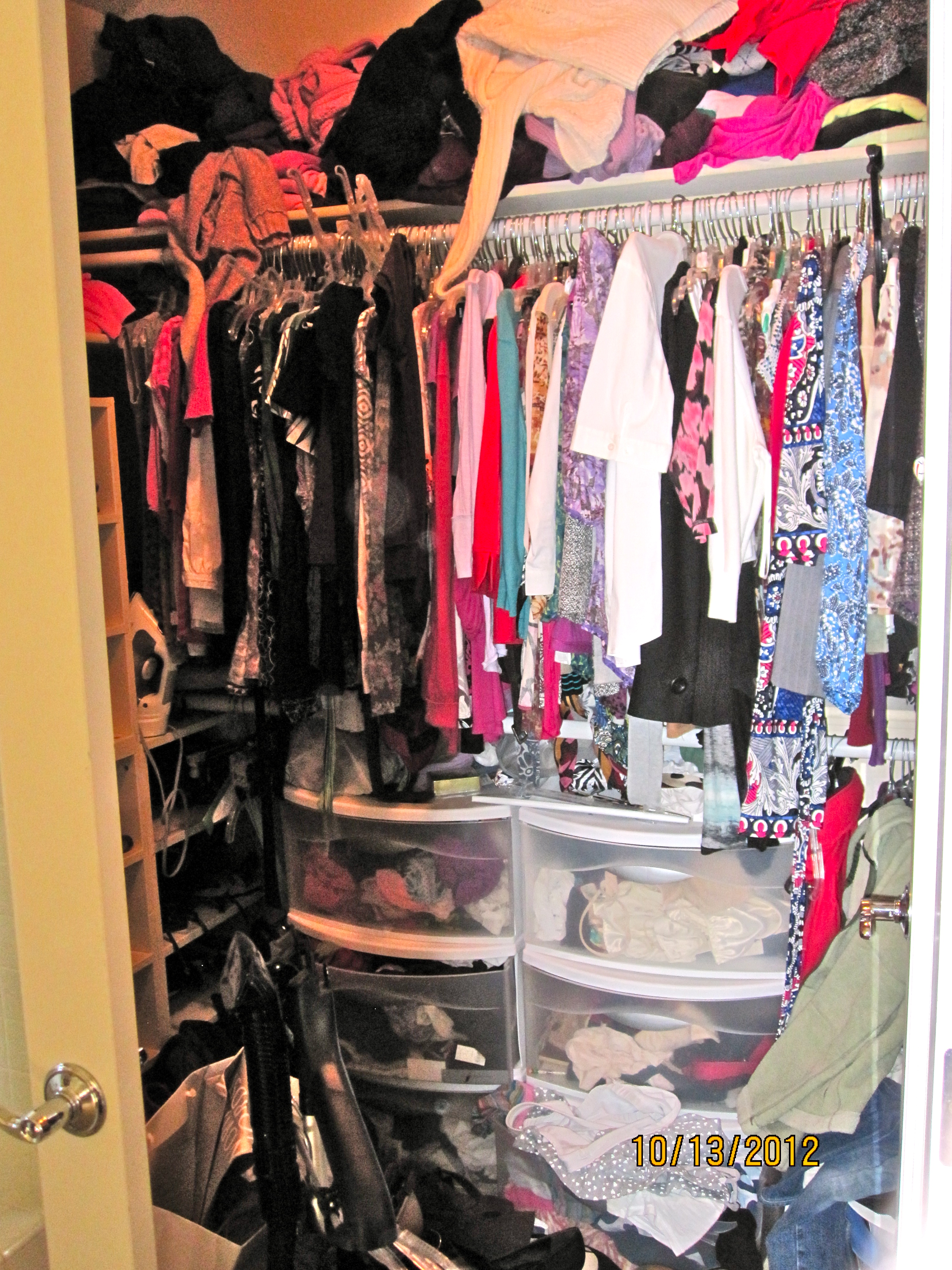
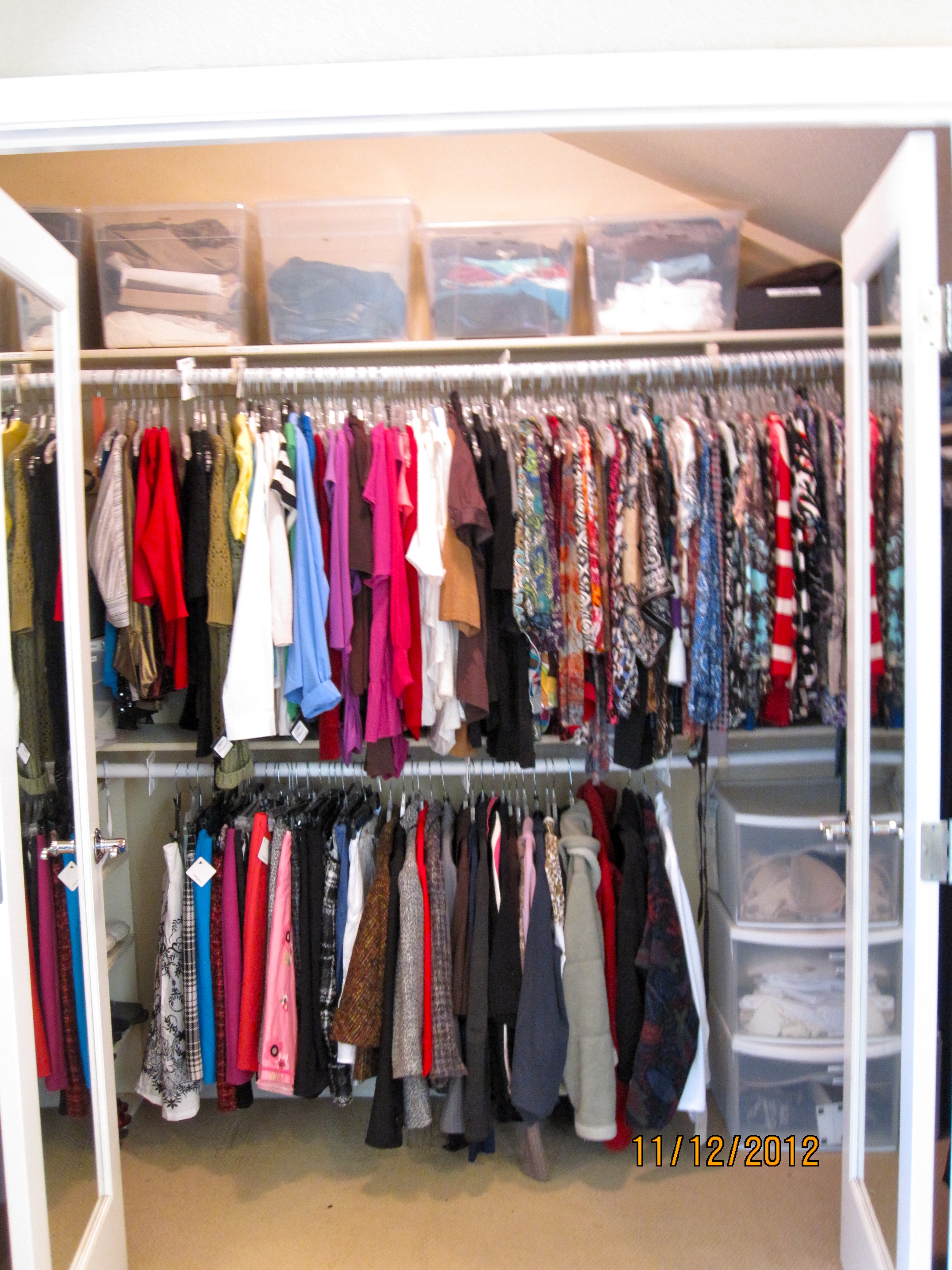
Laurie (not her real name), hired me recently to help her organize her overstuffed, clothes closet. It took two days. One day to sort and then edit what she no longer wanted and one day to contain, label and return what was left to her closet, organized, folded, hung right side in, and accessible.

Laurie is an active, super-mom of two school-aged kids, with a full time sales job. She told me she wanted to feel less stressed in the morning which often meant time spent looking for a matched pair of shoes or a clean outfit so she could get herself dressed in time to feed her kids and get them to  school before heading to work herself. She confessed her husband was neater than she was and her disorganization was creating friction between them.

This is the type of organizing job that most people think of when I tell them I do residential organizing.  In fact, organizing a closet is one of those “dream” assignments that most professional organizers knows comes once in a blue moon.

In general, the people who hire organizing professionals to work in their homes are those who have much bigger challenges.

This is why I silently cringe when I come across people who refer to themselves  as a “professional organizer” but have no significant experience working with clients, let alone credentials or training.

In May of next year,  the official manual of mental health diagnosis and criteria, otherwise known as the Diagnostic and Statistical Manual (5th edition) or more commonly known in the mental health world as the DSM-V, will be published by the American Psychiatric Association.

The DSM-V contains a listing of diagnostic criteria for every psychiatric disorder recognized by the U.S. healthcare system.  Among those conditions expected to be included is “Compulsive Hoarding Disorder” which up till now has been listed as a sub-set of Obsessive Compulsive Disorder (OCD), a serious anxiety disorder involving intrusive thoughts and ritualized behaviors aimed at reducing an individual’s anxiety.

Including Compulsive Hoarding as it’s own condition came out of research that found that people who suffer from this condition, which basically involves the excessive acquisition of items that  frequently are perceived by others as having little or no value but lack the ability to discard them, have not responded to treatments used for OCD. In addition, other studies have found that people who compulsively hoard don’t always show other symptoms of OCD.

Even if someone is not disorganized at the level of a “Hoarder” but may be what is termed “Chronically Disorganized,” this doesn’t mean their disorganization can be easily understood or fixed by just having the right containers.     There are many factors —  situational, emotional or physical– that impact a person’s ability to manage their lives in a reasonably organized way.  Disorganization is a symptom but it is also a behavior disorder that can impact a person’s well being, health and safety in very real ways.

For example, I recently worked with a middle-aged woman who was suffering from depression brought on by the death of her father with whom she was very close. Her depression lead her to neglect her home for so long that when I met her she couldn’t access her sink to get fresh water.  Her floor was covered with so much clutter that she would have difficulty leaving her home in an emergency.  Her bed was piled so high with clothing she slept on her couch.

The Institute for Challenging Disorganization, known in the industry as ICD,  is a subscriber organization that provides education and resources to those challenged by disorganization as well professionals working with this population. People with Chronic Disorganization, according to ICD, have a history of disorganization in which “self-help efforts to change have failed, undermining their current quality of life and the expectation of future disorganization.”

People with Chronic Disorganization are often great at keeping their conditions a secret. Such was the case with a client I had who was the picture of professionalism – a 45 year-old sales manager who was the top sales producer at her office but had not invited anyone to her condo in five years because she told me she was “too exhausted to clean up” and hadn’t unpacked since she moved in.

At a time when we have twice as much information coming at us, both digitally and in print, even the most competent person can find themselves challenged to stay on top of it all. Such was the case of an entrepreneur I worked with who could do anything involving technology but when it came to organizing his bills,  documents and other paper, he felt like a “lost cause.”

Even people whose lives are relatively stable can be challenged by the enormity of organizing challenges such as the retired widow who hired me to help her fit the contents of her 2,400 square-foot family home she just sold into a 1,600 square-foot city apartment she had rented.

Unfortunately, anyone can call themselves a  “professional organizer.” Doing so does not require any type of specialized training, certification or license.

The National Association of Professional Organizers otherwise known as NAPO is the leading professional association for the industry.  While their role is not to regulate,  they do require that members adhere to an ethical code, and are in the process of developing a basic curriculum that will be required of all members in the coming years.

Professional organizing is a relatively new industry, and NAPO, formed in 1985 and which now includes more than 4,200 members in 12 countries, including the U.S., was formed when people were discovering there was a growing need for help on ways to be more organized and productive at a time when consumerism was at its highest and the information age was just starting to explode.

Fortunately, there is a certification track available through an organization called the Board of Certified Professional Organizers® or BCPO®  The BCPO® requires certain experiential standards be met and applicants must pass an exam before they can receive their BCPO® certification. (I am getting ready to sit for my exam in February.)

Although NAPO and the BCPO® are working hard to establish standards for the profession, most consumers are not aware of these standards, nor does the general public necessarily understand the differences between someone who calls themselves a “professional organizer” and one who actually has the credentials, training, experience and education to perform the work at the highest level.

Consumers, whether they be businesses or individuals must rely on the recommendations of others, and their ability to size up the skills and qualifications of the organizer. This means they often have to make an important decision about the kind of help they need from their gut feelings.  This wouldn’t be a big problem if what you are looking for is someone to organize your clothes closet but what if, like many people, your disorganization is impacting your well being,  health or safety in bigger ways?

As a consumer, I would implore you to consider an organizing specialist the same way you would consider any other professional such as an attorney, dentist, doctor or accountant. Would you feel comfortable hiring a dentist who advertised on a free bulletin board?  Would you work with an accountant who you discovered on a flyer tacked to a phone pole? Would you send your parents to seek medical care from someone who had four other jobs?

All I’m saying is, you get what you pay for. In other words, Buyer beware.

Organizing Habits You’ll Want To Practice

Posted by

I came across these 10 Simple Steps to Staying Organized in Getting Organized Magazine.

Try to commit one or two to memory and start implementing them in your own life.

You can receive a digital version of Getting Organized Magazine, including these great tips by going to this link or copy and paste this URL into your browser:

http://www.gettingorganizedmagazine.com/2012/07/13/2012-summer/

1. If you get it out, put it back.

2.  If you open it, shut it.  

3.  If you try it on, hang it up.

4.  If you get it dirty, wash it. 

5.  If you don’t use it, get rid of it.

6.  If it doesn’t fit, donate it.  (my add in….or consign it or sell on ebay if it is a great piece)

7.  If it’s expired, dump it. 

8.  If it’s junk, throw it out.

9.  If it’s a bill, pay it.

10.  If you schedule it, write it down.

What ‘Sandy’ Couldn’t Wash Away

Posted by

While I have lived in California for 25 years  I grew up in New York City and still consider myself a “New Yaw-ker.”

Like a lot of people, when I see the images of destruction in the wake of Hurricane Sandy that hit the coastal communities of New York and New Jersey and hear the cries from people who have lost everything, absolutely everything, I still can’t believe it.

As a child, my family lived in an apartment that faced the Hudson River separating Manhattan from New Jersey.  In the 60s and 70s we went through two blackouts and at least three blizzards but this storm was altogether something different.

Yet what strikes me most is the gratitude people express for just having survived, for having their loved ones near by, for having the fortitude to know they will start over.

As an organizing professional I am deeply aware of the nature of people’s attachments to their possessions. I see almost daily how people instill their possessions with meaning.  Yet when they no longer possess it or they leave it behind either by choice or by circumstance, I am always struck by the notion that those things, in and of themselves, have no meaning. They become merely objects that in most cases, have no value other than what they can fetch on an open market. Their meaning along with the memories they evoke are tied to the people who possessed them.

The other day I was emptying a storage closet that belonged to someone I never knew and who had long since abandoned it.  It seemed strange and sad that no one had taken responsibility for the items I found: photographs of family events and babies long since grown;  awards and commemorative plaques honoring the life and work of this person; books and files and several religious figurines.

I took most of the items to Goodwill. What couldn’t be donated was recycled.  Doing so made me think of the thousands upon thousands of items that end up unclaimed every year in rented storage spaces, abandoned homes, even people’s current homes and forgotten storage areas. They become the remnants of their lives.  Items that meant so much one day, and nothing the next.

If tragedy teaches us anything, it teaches us who we really are. When I organize someone’s home or office or help them get organized to move,  I often stress that in the scheme of things they come first, not their stuff.  I am not saying this to judge them or to minimize the value they place in their possessions, rather, I am encouraging them to be as conscious and thoughtful as possible about what they own.

Not everything has to have “meaning” but ideally if it takes up space it should have usefulness or add value to our lives in some way. It should give us joy or be pleasing or practical or purposeful. Just like our homes, that offer us a place of refuge or peace, the items we surround ourselves with offer us something real and tangible.  At the very least they should be a positive reflection of ourselves and something familiar to come home to.

To me that is the true lesson of Hurricane Sandy. That, in a matter of hours, all that was familiar to so many was lost.  They didn’t expect it. They couldn’t plan for it and yet they remain hopeful that their lives as they once knew them to be will one day return.  The rain and the winds and the water may have washed away their homes but it didn’t wash away their spirit.

Would you like to help people impacted by Hurricane SandyDonate now


The best year-end tax tips

Posted by

What would it mean to you to have April 15th come and go next year as just an ordinary day? No stress, no tears, no panic. This month I have invited a special guest to share her best year-end tax tips.

Jodie Israel, MBA of JMI Accounting is both an experienced accounting professional and financial adviser to Fortune 1000 businesses and emerging businesses. I consider myself extremely lucky that I am one of Jodie’s clients.    Taking a little time now to plan and get organized will save you hours of  hair-pulling, stress later. Read on to discover Jodie’s year end tax tips.

It’s almost the end of the year and time again to get your accounting records in order for your CPA and your tax return.  Even if you’ve stayed on top of everything during the year, there still are some tasks to do to ensure you have things ready to close your books.  Every business is different so the tasks below should be used as guidelines.  Please consult a professional should you have questions or need more direction.

Tasks to Prepare for Year End Close

Get Organized:  Find all receipts for any deductions you want to claim.  Look everywhere – desk, car, wallet, briefcase, etc.  Remember that having no receipt equals taking no deduction.  Be sure to review personal bank and credit card statements to identify any business-related expenses.  Also review business bank and credit card statements to identify any personal expenses.  Pass this information along to your tax preparer.

Cash Receipts:  Make sure all business expense cash receipts are entered into your accounting software.

Reconcile Bank and Credit Card Accounts:  Be sure each month’s statement is reconciled to confirm all transactions have been posted to your accounting software.  This ensures your general ledger bank balance (the bank balance in your accounting software) matches your bank statement.  Fix any mistakes you find.

Petty Cash:  Reconcile your actual petty cash balance to the balance in your accounting software and adjust as necessary.

Invoices:  Make sure you have invoiced your customers for all goods and services provided during the year.  Anything that slips through the cracks is lost revenue.

Accounts Receivable:  Review the outstanding balance and make sure all payments are received within the invoice terms.  Compare the Accounts Receivable balance appearing on the Balance Sheet to the actual outstanding A/R.  If there is a balance outstanding on the Accounts Receivable report but the customer has paid, the payment was probably recorded incorrectly in your accounting software and needs to be corrected.

Accounts Payable:  Review the outstanding balance with your tax preparer to identify any bills that can be “pre-paid” and expensed in the current year.

Notes Payable:  Verify that the notes payable (loans) amounts on your Balance Sheet match the Note statements.  Confirm all notes are posted as liabilities and make adjustments as necessary for any notes paid in full or forgiven during the year.

Fixed Assets:  These are the larger purchases you made during the year, i.e., equipment, automobiles furniture, computers, etc.  Take an inventory of what you have and record the sale or disposal of any fixed assets you no longer own.  Confirm with your tax preparer any depreciation that needs to be posted.

Expense Categories:  Review all expense lines on your Profit and Loss Statement for illogical amounts.  For example, confirm that all office supplies are listed in the Office Supplies expense line and not incorrectly posted to the Auto Expense line.  Your tax preparer will categorize your tax deductible expenses and will need to know that the amounts for each type of expense are correct.  Confirm with your tax preparer if you can deduct all or a portion of the cost of your cell phone, internet, etc.  Also, if you are using a budget, you will want to compare your budgeted expenses to actual expenses.

Inventory:  Verify that your inventory balance is correctly reported on your Balance Sheet.  The easiest way to do this is to take a physical count and compare it to your reported value.  Confirm that the inventory is valued correctly and revalue as needed.  Your tax preparer will need the following:  January 1 inventory balance, the cost of inventory purchased throughout the year, the amount of inventory that was sold during the year, December 31 inventory balance.

Retirement:  Confirm with your tax preparer the amount of 401(k), SEP IRA or Simple IRA contributions you can take.

Payroll:  If you have employees, confirm that all payroll reports either from a third party or for payroll generated in-house are correctly posted to the payroll and tax expense lines.  Confirm all tax has been paid.  Ask employees to review their most recent pay stub to confirm the accuracy of the name, address, etc.  Generate, print and mail W2, W3, and all state and federal tax forms.

Outside Contractors:  If you have used outside contractors, confirm their 1099 status, name, address and tax ID number.  Collect W9 forms.  Generate, print and mail 1099 and 1096 forms.

Year-End Accrual:  Post any year-end accruals.

Depreciation:  Post annual depreciation expense.

Financial Statements:  Print all financial statements.

Back Up Accounting System:  Be sure to make a backup of your accounting software and store it offsite.

Tasks to Prepare for Next Year

Cash Flow Forecast:  Prepare a cash flow forecast for next year.  This will help you identify recurring and non-recurring income and expense.

Prepare a Budget:  Prepare a budget for next year.  Budgets can be a very helpful tool to make sure your business is on track.

Meet with Tax Preparer:  Meet with your tax preparer to identify any bookkeeping procedure modifications.

About JMI Accounting
Jodie Israel has experience in both the accounting and financial arenas, working with businesses of all sizes, from Fortune 1000 corporations to emerging companies.  She has an MBA degree and, as a QuickBooks Certified ProAdvisor, she has experience with all levels of accounting and bookkeeping.

Posted in Uncategorized | Comments Off on The best year-end tax tips