
The folks at EVERYTHING BUT THE HOUSE (EBTH) had this great slide show I wanted to share that shows 8 pretty common household items you may have that could earn you money. Keep them in mind next time you get on your next decluttering binge.
LET'S MAKE ROOM
Home Organizing and Move Management
Talk to LisSchedule a Free, Discovery Call
510.846.1976
Sign up to receive our newsletter and special offers
When your new roommate is Mom or Dad
Posted by
It’s common to see adult children moving back in to their parents’ home after college to save money. But here’s a surprising fact:
14% of adults living in someone else’s household are actually the homeowner’s parents – and the trend seems to be on the rise, up from 7% in 1995, according to a Pew Research Study.
It’s one thing for a 22 year old that had roommates in college to move back in with their parents. It’s another thing to be 50, 60 or 70 years old and find yourself living with your adult children in their house, possibly with your grandchildren.
Aside from all the psychological and emotional aspects involved in sharing a home with relatives, there are also the practical and organizational considerations:
- Will there be room for my belongings and what’s important to me?
- Do I have a say in how things are organized in common areas such as the kitchen, family room or garage?
- Will I have to let go of things I love?
- Will I have storage areas I can call my own?
- What rooms or storage areas will I need to share?
- Will I feel safe?
Whether you are moving back in with your parents or your parents are moving in with you, planning for these questions ahead of time will make for a smoother transition and less stress when it comes time to blend the family. Here are a few strategies I recommend you do before you start packing.
- Make it safe. Clear all exit routes such as floors, stairs and hallways of possible trip hazards.
- Make it accessible. Provide sufficient space and clear access to bathrooms, kitchen and other common areas
- Make it private. Dedicate a room large enough for a bed (or beds) with at least one closet or storage armoire for clothing and personal items and natural light from an outside window. If this room was previously used for storage of other household items, find other homes for them or consider donating them if you haven’t used these items yourself for years.
- Make it welcoming. Create shared storage areas by making room inside your kitchen cabinets, pantry, utility closet, linen closet and garage. This may be the perfect time to do a little downsizing yourself!
- Set clear boundaries. If you know you don’t have room for everything your relatives own (and you probably wont) explain that you only have limited space. Help them decide what they really love, want and use. Let them know they have options but they probably won’t be able to keep everything!
- Make it possible. Offer to help with the actual physical move or downsizing if you can or consult with a professional organizer who specializes in residential move planning if you need ideas, hands-on help or guidance.
What a lobster can teach us about getting organized
Posted by
I’m going to tell you a short story about a lobster to illustrate what happens to us when we experience change and more importantly when we are called to take action when we want to change something about ourselves or our homes.
As a lobster ages and grows, it needs to shed it’s shell. It does this by finding the safest place it can in the rough surf of the ocean and far away from other predators. As it matures, its shell starts to constrict around it’s body. If it didn’t shed its shell, it would suffocate and die. This means that until its new shell hardens, the lobster will be completely vulnerable to the elements. It has an instinctual need to risk its life in order to grow and thrive.
For many of us “change,” even when it’s for the good, such as when we decide to get organized, makes us feel like that lobster. We know we need to move forward but sometimes the thought scares us as much as being thrown into a violent ocean current. Not changing can also mean suffocating in our own shells. It’s no wonder facing change and taking action can be so overwhelming.
Change, though not a linear process, is like the lifespan of the lobster. It involves a process of feeling uncomfortable enough to make a change that will bring us to know ourselves better. It involves several phases which I’ve narrowed down to six.
The Six Phases of Change
1) Passive discontent
2) Naming the problem
3) Getting help
4) Readiness
5) Doing
6) Results
Phase 1: “Passive Discontent”
This is the phase marked by general feelings of dissatisfaction with the status quo. It’s a kind of restlessness combined with a heightened level of awareness. It may come about after you’ve read a book, seen a TV show or heard someone talk about something that makes you uncomfortable, angry, sad, frustrated or overwhelmed. Those close to you may have even hinted to you that something was wrong. You’ve been feeling “not yourself” but you’re not ready to take action yet.
The sad part is some people stay at this phase forever. This happens when the pain of changing exceeds the pain of the status quo.
Such is the case for some people with severe and chronic disorganization or Chronic Hoarding Disorder This happens when people pose a risk to their own (or other’s) health and safety by retaining extreme levels of indoor and outdoor clutter.
Unfortunately, the anxiety they feel when they consider letting go of possessions, no matter what condition, can exceed the pain of living in spaces that are completely unusable. Thus they remain stuck in a kind of limbo until forced to make a change against their own will. Most people who feel disorganized are not “Hoarders.” Instead we all fall somewhere along a spectrum from minimalist to severe acquirer. Most people are somewhere in the middle.
Phase 2: “Naming the problem”
When you ask yourself the question, What needs changing or what needs organizing? You are at this phase. This is where the soul-searching begins. You start thinking about resources for answers but you’re still apprehensive about verbalizing your thoughts or asking for help. Early attempts to express your dissatisfaction may result in your retreating to your shell especially if you are feeling unsure of yourself or if you are concerned about the judgment of others.
Phase 3: “Getting Help”
At this point you may be ready to look for some information or answers to help you better understand your feelings. These are actions that would include talking to friends and family as well as gathering information through research, online searches or consulting with professionals. You may start reading or attending talks or asking for advice. You’re dipping your toes in the water but you’re not yet ready to dive in. You’ve started to realize you can’t make the change you want by yourself and you may even start to feel some hope as you move to the next phase of being ready to take some action.
Phase 4: “Readiness”
You are now committed to using the physical, emotional or financial resources you have to start making some changes. You’ve hired a professional, received some good advice, or resolved to take action yourself. You may be feeling both relieved and impatient as you realize you want to make change happen sooner rather than later.
Phase 5: “Doing”
During the “Doing” phase, you experience the ups and downs of progress. Slip-ups may occur and you may feel discouraged. Motivation is replaced by the need for habits and contingency plans. Your ability to achieve your desired change is dependent upon your ability to withstand the disappointments, backsliding and obstacles. This is where planning is so critical to the process of change. If you don’t have a plan of action, you may get to this part of your journey and want to give up. Having a plan is something you should have in place by this phase. This is where hiring a professional organizer is worthwhile because he or she will have the expertise to help you plan for all contingencies, anticipating problems and suggesting alternatives.
Phase 6: “Results ”
Circumstances change from inside and out. Making small changes can have a big impact on your life. As a result of the changes you make and the actions you take, major events may occur. You can experience these as both “good” and “bad”. You’ll gain greater clarity around goals and desires and your energy increases but you may also see the unexpected consequence of the actions you’ve taken. People around you may behave differently towards you. Some may try to sabotage you. If you need to, seek some outside advice from friends or professionals who have tread the same path or who can advise you about how to manage unsupportive people. When you get to where you want to be, you can reflect on how far you’ve come.
Healing the world, one pot-lid at a time
Posted by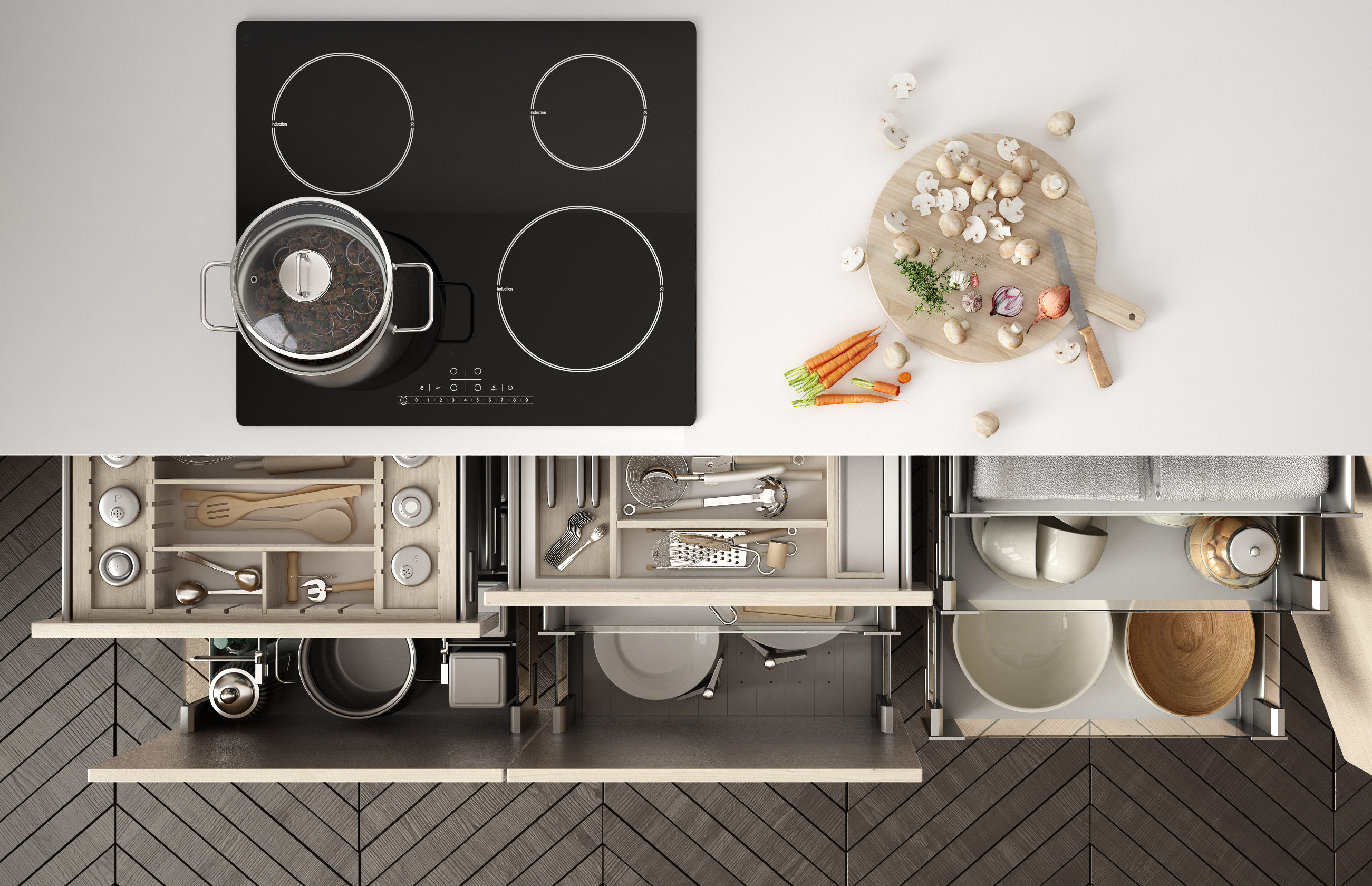
To some people the idea of hiring a professional to help them organize their cluttered kitchen seems frivolous. After all, there are so many other truly tragic problems in the world. Hunger. Disease. Poverty. How could finding the best way to store a dozen pot lids compare to the problems of millions of people around the world struggling every day just to make ends meet?
When I think about the work I do as a professional organizer it reminds me that healing is also about controlling what my clients can control and recognizing that change even when personal and local can still have an impact.
It never ceases to gratify me when my clients express how much the transformation of their spaces – whether it is their kitchens, offices, garages or bedrooms – has made them feel happier, calmer and more energized to tackle other challenge of their lives. Some have confided that the work we’ve done together made them happier in their relationships with their spouses, their children and their bosses.
Many of my clients do help solve the problems of the world. They include emergency room nurses, physicians, mothers, fathers and therapists of all types. I think this is because the caretakers of the world are often the ones, not surprisingly, who are in the most need of my help not because they are so disorganized but because they give their time over to the care of others and in so doing, have pushed their own well-being down their list of priorities.
So when a caretaker asks for my help, I know I’m doing more than just organizing their pots and pans, I’m making their lives just a little easier, a little less stressful, a little more peaceful. It’s not brain surgery but it does make a difference.
The Motivating Power of WHY
Posted by
All during January you are going to hear and see stories about getting organized. It’s the second most common resolution people make after “lose weight” and about as likely to happen. So what kills a thousand good intentions? It’s not because you are weak or lack the skills or even a plan. It’s because you haven’t come up with a truly, compelling, all-out, no holds barred, take no prisoners, terrifyingly vivid and all consuming, WHY as in, why do I want to be more organized? There are lots of really good reasons to get organized here are a few I’ve heard over the years:
- Be free to do more with my time
- Feel less stress and anxiety
- Be able to entertain at home or have friends over
- Have more room and time to do what I enjoy
- Be a better model for my children
- Get more done at work and present myself more positively
Getting clear on your WHY is the key to following through on your organizing goals or resolutions. It is the single most important motivator when you start and it’s the glue that helps you keep going when you back-track. Most importantly your WHY has to be for you! It doesn’t mean your family or coworkers or boss won’t appreciate it, but it has to mean more to you!
If your WHY is not strong enough to get you going, then pick another. When I started organizing it was right after I left my job in 2008. I was going stir-crazy because I wanted to be useful and I needed to see results. I certainly didn’t know then that I was going to become a professional organizer, let alone start my own business. My WHY was about my desperately needing to feel in control at a time in my life when things felt very chaotic. Of course, the added bonus was that I also could also find that cute green jacket when I needed it and I stopped buying duplicates of antiperspirant. Want to know the full story of how I got started? Click here
The Meaning of Things
Posted by
Recently I’ve been thinking about things. Not things in a colloquial sense but literal things, objects: the computer; my grandmother’s sculpture; the four pairs of eyeglasses I own. I’ve also been thinking about memories. What it means to have a memory? What it means to lose your memory? What it means to lose your memories, as thousands of people did last week when they lost their homes in the Northern California fires, just about 90 minutes from my home in Oakland.
I work with people nearly every week helping them decide what to do when they want (or need) to let go of stuff. Not just the things that remind them of who they once were, or places they once visited but also regular things too; Things they find useful or once did.
Two of my close friends lost their home in the Northern California fires. They lost everything they owned. They had just enough time to escape with their dogs and the clothes they must have quickly put on since it was 1 a.m. when they evacuated. My friends are extremely resilient. They’ve chosen to move forward, not look back. I know it must be hard. I wonder how often during the day they face the inconvenience of no longer having small things, or feel the waves of grief flow over them when they think about the loss of more important stuff.
I’ve heard many of my clients say to me, “I can’t let that go. It reminds me of ….” I sometimes ask, what would happen if (blank) should disappear? Would the memory go with it? In some cases it could and it does. I think this is what is so profoundly difficult about the process of getting organized, downsized or as I like to call it “curating” your life’s contents.
A long time ago I was hired to clear out a small storage unit belonging to a woman who had died and whose family was not interested in claiming the contents. There was in fact nothing of significant monetary value left behind but there were “memories.” Commemorative plaques; a community service award; several family photos, a child’s simple drawings as well as knickknacks and other personal items. Things that were obtained, given, created for her and about her. Without her, I realized they didn’t mean much to me but they meant something to her.
People who lost everything in the Northern California fires last week and for that matter from the storms in Texas and Puerto Rico just days earlier, are heard in the news saying how “grateful” they are for having their families, for having survived, for knowing how “lucky” they were. It’s an amazing testament to their humanity that they can recognize this at one of the lowest points of their lives. And I have no doubt that they too are grieving the loss of their memories and possessions.
I’m not sure what all this has taught me as a professional organizer or even just as another human being. Of course, like many, I’ve considered what I would do and feel if I was in a similar circumstance. As a professional, I wholeheartedly encourage planning whether it be creating a safety plan with your family, an emergency kit or getting your most treasured memories and important documents digitized.
Being prepared also means helping those you love be better prepared to grieve by making your wishes known ahead of time, like a living will. This type of document lets others know what matters most to you when you can no longer make those decisions yourself. A dear friend did this about six months before she passed away and it made a world of difference to her closest friends and family. She wrote her plans down. At the top of the page she’d written the title, “End Of Life Matters.” The irony was not lost on either of us.
Last week my crew and I helped a couple downsize their home of twenty plus years. It’s something I’ve done many, many times yet each experience is different. Together and separately my clients made literally thousands of decisions in just a few days. Some of those decisions were easy. Many more were not. Even the most seemingly benign objects brought back memories of family gatherings, professional obligations, personal triumphs and poignant losses. Without context they are just things but for them they represented the meaning of their lives.
When my clients let go of things sometimes the memories go with them. I see my clients resist and I feel that struggle. Sometimes I even feel it directed at me though I know it’s not. I tell them, “I don’t have an opinion about what you keep. I do, however, have an opinion about helping you get to where you want to go.”
Letting go of things can sometimes feel like choosing to let go of memories. And who chooses to let go of their memories?! At least with my clients the choice is theirs. This wasn’t the case for the people in the recent fires. Do their memories go with them even when they have lost everything?
I hope so.
Paper you can toss (or shred) today without fear
Posted byEven if you do everything on your smart phone, paper is still a fact of life, as is identity theft. Knowing what paper is safe to toss is not only a good habit, it will help minimize your chances of being a victim of identity fraud and make it easier for you to know just what to keep (e.g., for tax purposes) for when you want to get organized.
TIP: If you don’t have a shredder, use a black marker to hide any confidential information on documents that contain an account number, medical record number or social security number before you toss. Items that may include this information are noted below with the word shred.
TIP: Be sure you keep and regularly empty a recycling bin in the area where you do your paperwork.
*These are general recommendations for household paper. If you own a business or have extenuating circumstances, such as you owe back-taxes, consult with your tax preparer or consult an attorney about your specific situation.
What to toss…
Pages you’ve printed off the Internet that don’t contain anything about you personally.
Online account information you can easily find on the Internet (shred).
Brochures, flyers or marketing material for events or products that don’t interest you anymore.
Outer envelopes of mail you’ve received, even if it has your address.
Paid bills after one year if you are not claiming them on your taxes (shred).
Business cards for people or companies you would never do business with or meet for coffee.
Loan documents when your loan has been sold or paid off (shred).
Closed bank account statements and checks (shred).
Greeting cards from people you don’t like or remember (Recycle).
Your child’s scribbles and instead curate and take photos of your favorite artwork and rotate their latest creation as part of your “collection.”
 Investment statements, excepting your year-end statement and any records of trades (shred).
Bank statements after one year unless they contain expenses you’ve claimed on your taxes (shred).
Prescription receipts unless you claim them on your taxes (shred).
Credit card statements after one year unless they contain expenses you claim on your taxes (shred).
ATM and store receipts more than 30 days old.
Paycheck stubs more after one year. Keep your W2 and tax return instead (shred).
Copyright: Lis McKinley, 2017
Lis McKinley, M.A., is the owner of LET’S MAKE ROOM based in Oakland, California. She is a Certified Professional Organizer and Move Manager specializing in helping homeowners and other residential clients get organized to move, remodel or simply enjoy their homes more with less of what they don’t need.
5 Great Reasons to Downsize Your Home
Posted byMoving is expensive (and stressful)

The American Moving and Storage Association states that the average cost of an interstate household move is about $4,300 (distance of 1,225 miles) and the average cost of an intrastate move is about $2,300 (4 movers at $200 per hour). Both average moving costs are for 7,400 pounds. If you live in places like the San Francisco Bay Area, Los Angeles, New York or Washington DC, the costs are even higher. Since movers typically charge based on volume or weight, it follows that the less you have the less it will cost. This is just one great reason to downsize your home. Here are four more great reasons to downsize your home, moving or not:
- You can create new memories. If you are holding onto stuff because you are afraid you won’t remember it, it may be time to curate what you own so you can make room for new experiences. Try photographing the things you want to remember but can’t or don’t want to take with you. Have them made into something special such as a memory quilt or photo album. If it’s your work you want to remember, perhaps others want to remember it too. Look into making a legacy donation or creating a special archive in your name.
- You won’t burden your kids. The saddest and most difficult task most children face is the death of their parents. Imagine how much more painful it would be if, on top of their grief, they also have to face the daunting task of emptying your home. Make it easier for them and start downsizing now. Let them remember and know you from what was important to you, not from the stuff that wasn’t.
- You’ll realize what’s really important. When you make room for what really matters in your life, you discover what’s important and what isn’t. Do you really need 50 plastic food storage containers? Do you really wear 500 pairs of shoes? Do you really use that collection of rusted auto parts? Someone can use them but you don’t have to.
- You get to start fresh. If relocating to a smaller home means downsizing the stuff in your existing home, try to imagine your life in your new home. Perhaps you’ll finally have the lifestyle you’ve been dreaming about. Gain the peace of mind that comes from knowing you’ve made great choices about your health and wellbeing. Instead of being burdened by your stuff, you’re having fun enjoying your life!
3 hogs taking up space in your home (and they’re not your family)
Posted byAre you moving, getting ready for a remodel or simply want more room in your home with less clutter? Here are three common space hogs and what you can do about them.

-
Other people’s stuff. Did you agree to store things for your kids, relatives or friends for a few months but now those months have become years? Tell your kids or your Aunt Sadie you are moving or remodeling (even if you aren’t) and kindly ask them to arrange to get their items since you will need the space yourself. Set a firm deadline – a month is reasonable in most cases – and ask for their permission to sell or donate them — at your discretion — by a certain date if they don’t respond by that date. That way you’ve done your due-diligence.
-
Boxes from your last move (and likely the one before) that never got unpacked. Remember those boxes? I’m guessing you don’t but apparently they were so important that you bothered to move them at all. Chances are they contain one of the following: Old papers, memorabilia, holiday supplies, stuff belonging to your parents (or kids) that you just couldn’t face, or all those items that you don’t use but couldn’t throw away at the time.
If you are moving, are you really going to pay to have those boxes moved again?!
Here’s what to do about them starting with old papers: Unless you ran a small business, and they contain your tax records for the past seven years, get rid of them. Arrange to have a local shredding company pick them up or take them there yourself but don’t waste your time shredding them. Memorabilia: We keep memories for just this moment. No one else cares about these memories except you. If you want to leave a legacy for your children, don’t make it those boxes that have gathered dust in your garage or attic. Holiday supplies: Unless you used them last year, donate them to a charity that accepts art supplies. Stuff that belonged to your parents (or kids) that you coudn’t face: Refer to #1 above.
-
Magazines and old mail. There are certain magazines I love to read but once I’ve read them, they get recycled. Except in rare cases such as vintage out-of-print magazines, most collectors and charities don’t take old magazines. If you want to get rid of them, gather them up in small book boxes (so you can lift them) and carry them to your home’s recycling area. Most municipal recyclers won’t charge for paper recycling. As for old mail, you have three options: 1) pay to have it all shred. Depending upon how much you have, this could be costly but it will be the most timesaving approach and insure your identity will be safe. 2) Have a sorting party. Invite two or more people to help you sort your piles into keep, shred or toss. Keep includes “vital records” such as original birth and death certificates or personal memories that can’t easily be replaced. Shred includes any document, opened or not, from a banking or financial institution if it’s not obvious junk mail. Don’t waste time opening them if you’re not sure. Toss is everything else. 3) Hire a professional organizer or productivity specialist that specializes in residential or home office organizing. They can advise you about what to keep and help you sort and dispose of your unwanted paper safely.
What to do with your stuff when later becomes now
Posted by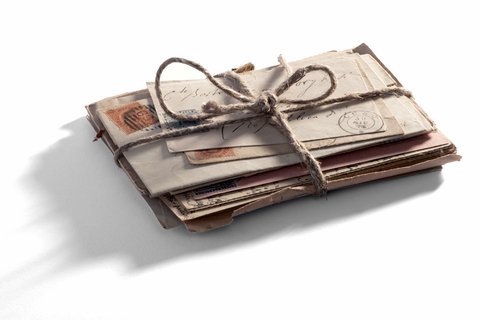 When it comes to the stuff in our homes, I believe a continuum exists between two points – keep everything and save nothing. Most people fall somewhere in between. Yes, there are extremes at both ends – those with a tendency to acquire an excessive amount and those with an equally extreme tendency to rid themselves of anything of value, sentimental or otherwise. But for most people, myself included, we all have sentimental attachments.
The other day I was wandering through my home and thinking about what I absolutely had to keep if I ever had to make the choice. As a professional organizer, it’s an exercise I practice regularly as a way to empathize with my clients.
It turned out the things I really felt strongly about were the items I have the most sentimental attachment to. None of it was furniture, thankfully. Mostly letters from my parents and close friends that could never be replaced. Photographs (the paper kind) from my childhood and “keepsakes” that I don’t need but that don’t take up much space either. I also have some written work that would be difficult to replace unless I took the time to scan it and for me, that’s not worth my time.
My husband has a box of important stuff related to his daughter, my step-daughter. And of course, I have a small “treasure box” of memorabilia from our life together.
The only time I know I would go through this stuff is if I were moving or downsizing. Otherwise it stays hidden, for the most part. But what does it mean not to have these things? Would it feel like my life had ended? What happens when you keep things with the intention of looking at them later and then find later is now?
Even if it comes unexpectedly, now should be when you get to re-read the letters, sort through the photos, recall the memories and maybe even tell the stories. But now is often competing with time itself. The house has to be sold. The move has to happen. The remodel is about to start. Sometimes, sadly, the owner of these things is no longer around for the task.
As an organizer, this is the most poignant part of my work; When I realize the meaning of that photo, award or stuffed animal toy only exists because of the person who imparted that meaning. When it belongs to someone else, you can impart your own meaning, but then you are left with the same dilemma: Keep it or let it go?
I find it’s useful to consider the truth of these questions when later suddenly becomes now.
- Would my life really be over if I let these things go or would I just feel that way?
- Is everything meaningful or could I pick out just the things that are most important to me?
- By keeping everything, am I placing a significant burden on my family to deal with later?
- Am I keeping everything as an excuse to avoid creating new memories?
- If this or that item should disappear would I miss it or attempt to replace it if I could?
- Would taking a picture of it allow me to let it go if I had to?
- Is there anyone who I know for certain who would want it (be careful with this one since you don’t want to obligate someone to take something they really don’t want).
- Do I really love it or am I keeping it to satisfy someone else’s (perceived) need – such as when you keep it not because you like it but because it was a gift from someone you care about.
Life is like walking through a wonderful art museum. You get to admire and spend a little time with the art work that resonates the most with you. You may even be able to take pictures or buy postcards. But at the end of the day, you don’t get to keep what you saw. You do however get to remember how you felt.